ARTIST

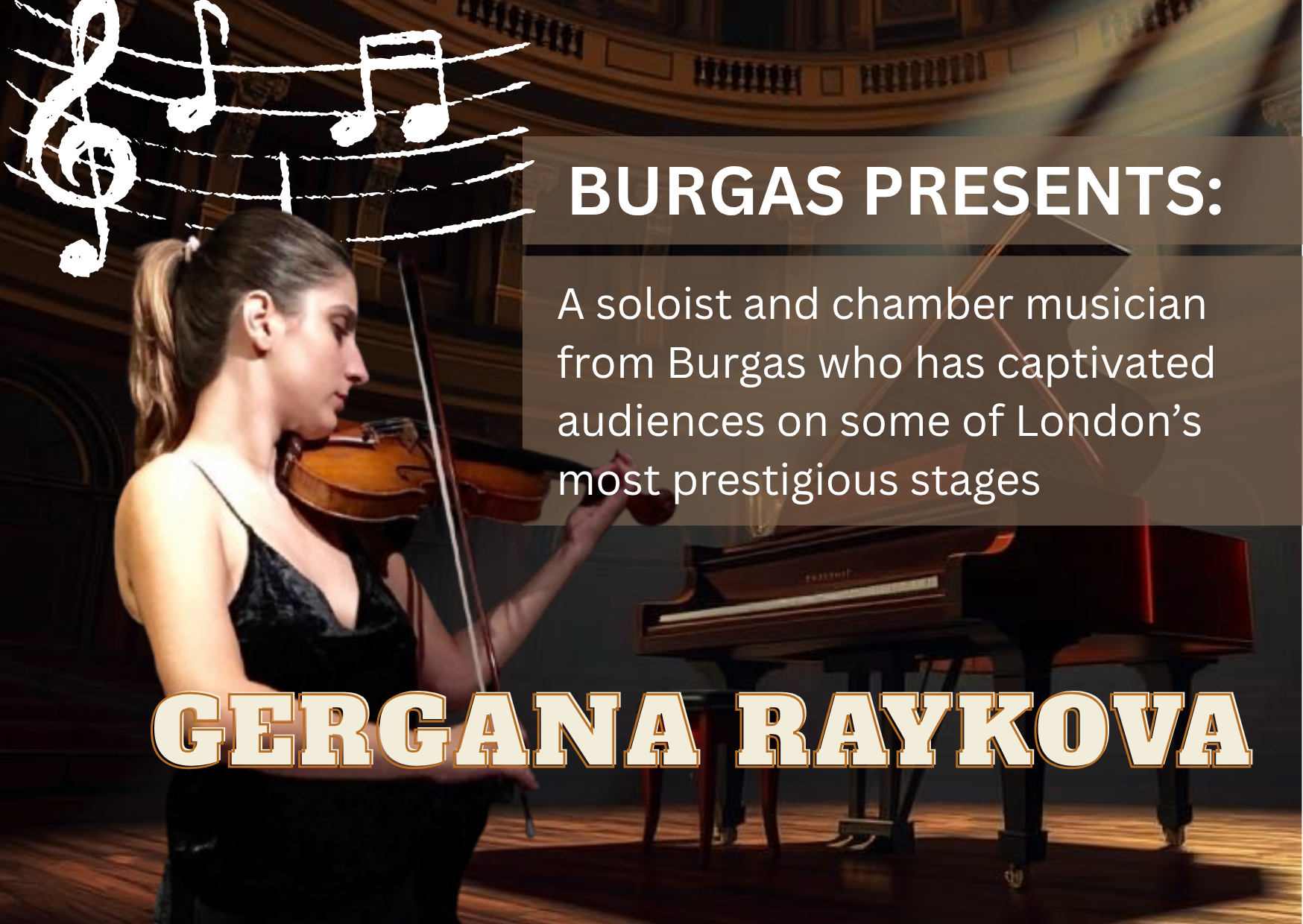
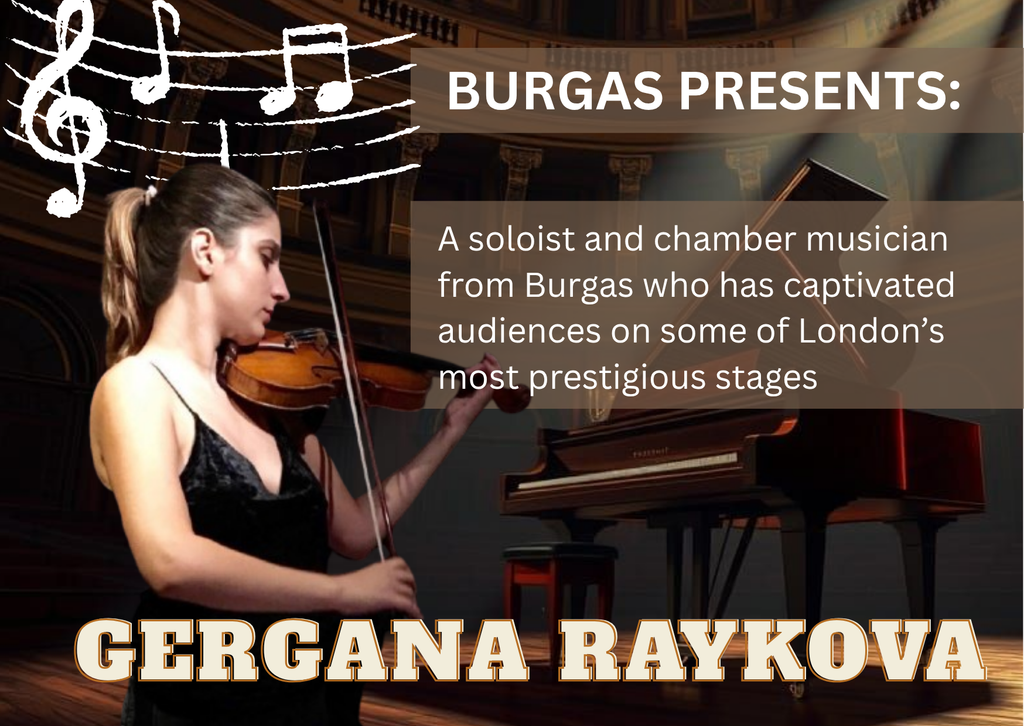
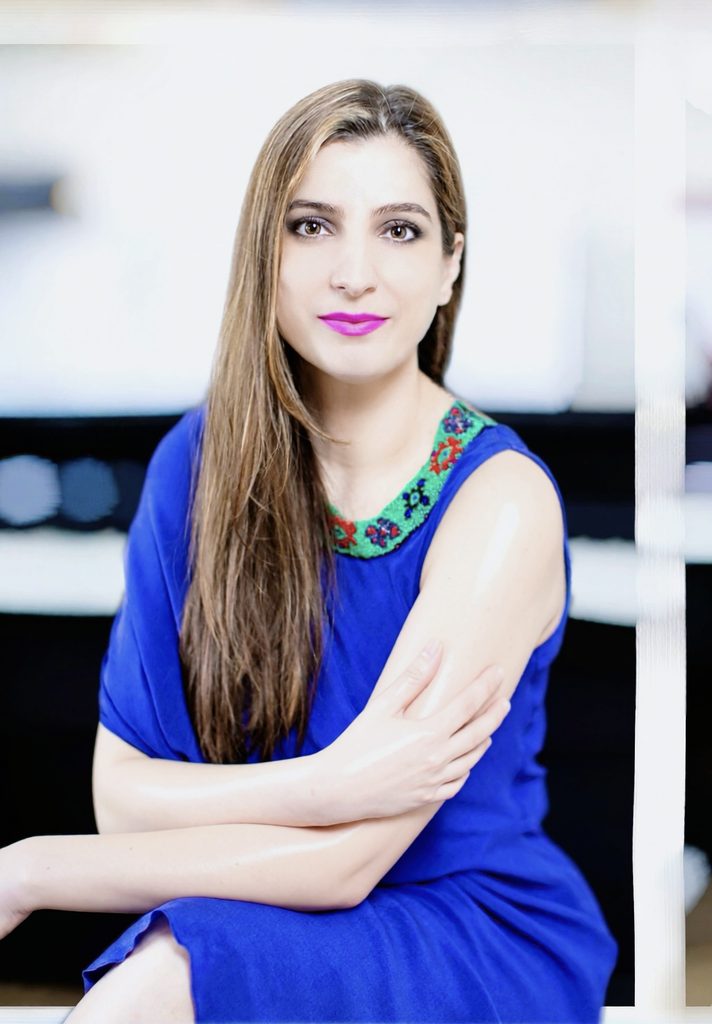
Gergana Raykova

Introduction:

Gergana Raikova is a violinist and the founder of the Burgas Festival – a chamber music festival that brings together musicians from Bulgaria and around the world in Burgas. Her journey into music began at the age of six, when her inner desire to play the violin led her to turn down all other opportunities and embark on her long-standing musical career.

Gergana spent 10 years as a music teacher at the Yehudi Menuhin School in Surrey, England, before deciding to devote her time and energy to a new venture – the creation and development of the Burgas Festival. The festival is the result of her desire to bring together the experience, knowledge, contacts and creativity she has accumulated over the years into a single space dedicated to music.

For her, Burgas is not merely a venue for the festival, but a city to which she is connected through her roots. That is precisely why she chose Burgas as its home – the place where she wants to create an international musical community and make chamber music a natural part of the city’s cultural life.

When did your love of music and the violin begin?

I started playing the violin when I was six years old. I don’t have a very clear memory of exactly what captivated me back then, but I do remember a very strong inner feeling – I simply really wanted a violin.

Over the years, it wasn’t at all easy to find a violin teacher. My parents went to great lengths to find one. There were teachers for piano, guitar, singing – you name it – but I turned them all down. Clearly, something inside me was drawing me towards the violin.

By the age of six and a half, I finally had a teacher and began my journey with the instrument. Since then, music has been an integral part of my life.

Favourite venue where you’ve performed?

Perhaps my favourite stage is… wherever I feel at home. In Burgas.

Sometimes the spaces closest to home and most personal to us remain the most strongly connected to music.

A stage you dream of playing on?

Any stage I haven’t played on yet is a dream. Every stage brings excitement and the feeling that something new is about to happen.

If I had to name one big dream, it would be America – more specifically, New York and the big stages there. I’m drawn to the scale of it, the chance to meet so many people and talents, to learn from them and to face stiff competition.

Is there a moment from your musical performances so far that has really stuck in your mind?

Every concert has something special about it, but the moments that have impressed me most are those when I’ve seen the audience’s emotional reaction.

I’ve had a few performances after which people have cried. In most cases, I didn’t even expect it. One of my most vivid memories is of a person who, weeks after my concert, came up to me and told me that they still feel tears welling up in their eyes when they think back on my performance.

That’s what has the greatest impact – the way music can remain in a person’s life long after the concert has ended. It leaves its mark not only on the performer, but also on the listener. It’s a kind of legacy and spiritual nourishment.

Could you tell us about one of your current projects?

At the moment, my entire focus is on the Burgas Festival. After ten years of teaching in England, I decided to stop so that I could devote myself entirely to the festival – to give my all to its development.

My aim is for the festival to become one big family of musicians. Many of the people I’ve worked with over the years are now extremely active, performing and established musicians. I want them all to come to Burgas, to feel the city’s energy and to play here, so that this energy can be passed on to the people of Burgas as a whole.

There are also specific events coming up in October. I’ll be at Windsor Castle in England, where I’ve been invited to present the festival and give a solo recital. After that, I’ll come to Burgas to present the same programme here, as part of the Burgas Festival programme.
Edited with PrettyUp

How can more young people be attracted to music?

I think a lot of it starts at home. There are children and young people who simply love classical music because it is part of the environment in which they grew up – what is listened to at home, what is talked about, what is shared.

Classical music has a very powerful influence on emotions and the psyche, and I believe that when a person is exposed to it from an early age, it can become a natural part of their life.

But it is also important that young people themselves are given the opportunity to meet professional musicians. That is why I want the Burgas Festival to develop educational programmes and an academy, within which children and young performers can take lessons, participate in masterclasses and meet world-class musicians face to face.

This is not just about training. It is an opportunity to forge connections and build a network of people that can stay with you for years to come.

How would you describe Burgas in one word?

Home.

When I think of Burgas, I feel as though I’m back home again. I want to go back, to reconnect with my roots, to see the sea, to be with my family and friends.

When you live abroad, that’s precisely the hard part – being separated from the people and your roots. And without roots, it’s hard to thrive for long.

Do you have a dream for Burgas?

I want the city to come alive for more than just one season. Burgas is beautiful and bountiful all year round, and I’d love to see a constant ‘buzz’ of cultural activity – concerts, events, gatherings and reasons for people to come together.

My dream is for the cultural calendar to be full – for there to be a concert or festival-related event every month or two. I want chamber music to become part of the city’s fabric, whilst at the same time Burgas should be a place that attracts musicians and audiences from all over Europe and the world.

The sea is also of immense importance. It evokes a sense of an endless horizon, and music is just like that – it knows no boundaries. By land, air and sea, we can connect Burgas with every corner of the world.

And my main goal for the Burgas Festival is for it to reach the very top European level – to be on a par with the established chamber music festivals in Germany and Switzerland, to attract top-class artists and audiences from all over. We have until 2032, and I believe this can be achieved.
By |2026-09-29T06:46:20+00:00September 28, 2026|ARTIST|0 Comments

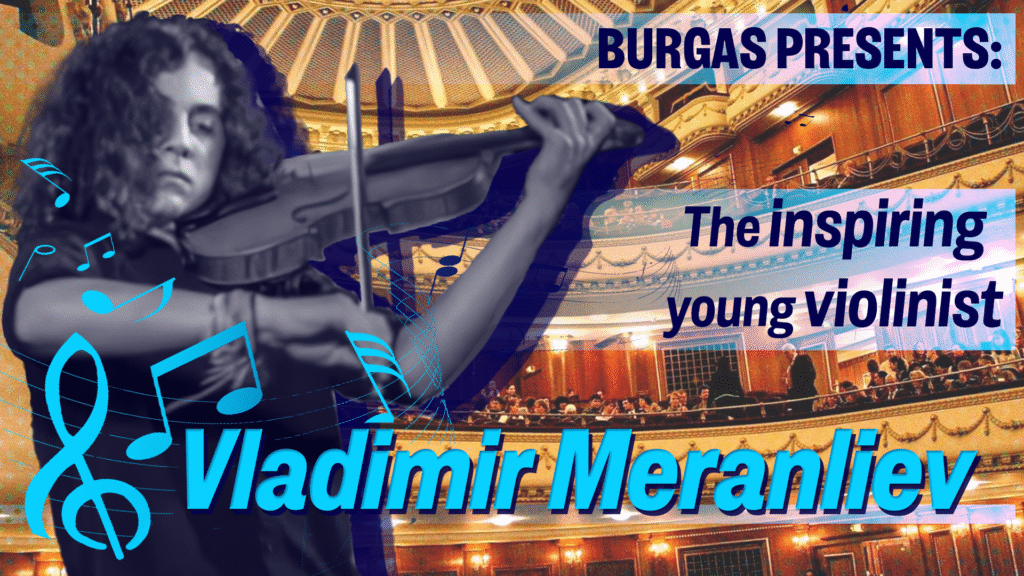
Vladimir Meranliev

Intro:

Vladimir Meranliev is one of the most prominent young musicians in Burgas. Smiling and energetic, he effortlessly shares his contagious love for the violin with those around him. At just 15 years old, he has already had numerous performances in Bulgaria and abroad — he has played as a soloist at Bulgaria Hall, the Burgas Opera, the concert halls of the National Music Academy ‘Prof. P. Vladigerov’, as well as on stages in Germany and Vienna. He showed interest in the violin at the age of five and was soon accepted into the National School of Music and Performing Arts ‘Prof. Pancho Vladigerov’. Since then, Lyudmila Ivanova has been his main violin teacher. His musical development has also been greatly influenced by Petya Toncheva, his solfeggio teacher at the music school.


Vladimir has won over 20 first prizes at national and international competitions. Since the beginning of 2025 alone, he has earned three first prizes at prestigious contests, including the First National Violin Competition ‘Orpheus of the Future’, in Sofia, and the ‘Cantus Firmus’ National Competition for Young Instrumentalists.


He has also participated in master classes with Prof. M. Minchev, Prof. A. Danailova, Prof. M. Hossen, Prof. M. Frischenschlager, and Prof. F. Draganov.


When did your love for music and the violin begin?

“I love telling this story. When I was five years old, my mother bought me a children’s book. On its cover was a little monkey named Dodo. The story is about how this monkey finds a violin in the jungle. A truck passes by and drops a box. Curious, the monkey opens it and finds a violin inside. She starts playing, and the whole jungle gathers to listen and enjoy her performance. The monkey begins giving concerts, traveling to other jungles to perform for other animals. I remember one illustration where many animals had gathered and the monkey stood on a rock, like on a podium or stage, playing while everyone watched her. That’s the whole story — a short, simple book. It made a big impression on me, and I told my mom, “I want a violin too!” She asked, “Are you sure?” And that’s how it all started. I joined the ‘Zvezdichka’ violin school at the Youth Center in Burgas. I played there for about six months before I started preparing for entry to the music school. So, soon it’ll be ten years since I first connected to the violin.”

Which is your favorite stage you’ve played on?

“Bulgaria Hall. When I was younger, my teacher took me to a concert in Sofia. That same evening there was another musical event at Bulgaria Hall. She took my hand and said, “Come see something.” I just peeked inside, and was barely taller than the chairs, and was amazed. The audience, the bright lights, a lady playing the organ…. I got chills from the whole experience — such a big hall, something I hadn’t seen before. It was incredible for me that just a year and a half later, I myself stood on that stage with the ‘Cantus Firmus’ orchestra behind me. In 2022, I won the ‘Cantus Firmus’ competition for my age group. Vessko Eschkenazy was on the jury, and part of the prize was performing on stage with him. That was my first performance at Bulgaria Hall.”

A stage you dream of?

“Another story. When I was younger, I participated in a children’s music festival in Hamburg. It was exactly one month before the COVID crisis. Between all the playing and preparation, I had some free time and my teacher suggested we go see the Philharmonic in the city — at the concert hall in Hamburg. This stage is something wonderful. I had never seen such architecture. Unfortunately, the hall was under renovation at the time, and I could only see a bit of it through a window. Almost six years have passed since then, but that experience made a deep impression on me. I’ve told myself that one day, not only will I enter that hall, but I’ll play on its stage!”

A memorable moment from your musical performances thus far?

“The day we had a dress rehearsal with Vessko Eschkenazy for the concert at Bulgaria Hall, which I mentioned earlier. We were to perform Bach’s Concerto for Two Violins. The first part was played, and the second was my turn. I opened my violin, tuned it, and started looking for the music sheets. But they were missing! I got very nervous and began frantically searching. The conductor told me we had to start. I was the youngest there, 12 years old, trembling all over. I kept searching but couldn’t find them. Then I realized I had left them on the music stand in our hotel room where I had last played. I immediately tried calling my parents to bring them urgently, but I had no signal and couldn’t reach them. This happened two hours before the concert — the most important performance in my career so far! In the end, spare sheets were found and the situation saved, but the memory of that stress still stays with me.”

Tell us about a current project?

“I’m currently preparing for a master class in Vienna, for which my classmate from NUMSI Burgas, Olga Doikova, and I were awarded at the International Violin Competition ‘Cantus Firmus’ 2025. We were included in the special category for Bulgarian violinists under 17 years old and won scholarships for the Summer Music Academy in Vienna. The festival has been going for several years now with many prominent names attending, and it’s held in a wonderful venue in central Vienna. This will be my first participation in Vienna and first performance at a higher international level.”

How can more young people be attracted to music?

“I believe it’s important to start at an early age. I know that in many European countries they organize open days where children get to experience culture and art. In this way, children see that they too can play and create. Why not? Creating is wonderful! There’s culture in every person; it just needs to be discovered and brought out somehow. When we create, we connect. It’s important to ignite children’s passion for art from a young age. That’s the best thing about the music school I attend — for me, it’s a different kind of school. When I enter the school corridors, actors in costumes, ballerinas or students carrying graphic art pass by. Art is everywhere around us.”

How would you describe Burgas in one word?

“Inspiring.”

What is one dream you have for Burgas?

“I dream that music, which for me is the highest form of art, becomes more integrated into the city. I dream of having a nice concert hall. We need a good concert grand piano….. I will walk down Bogoridi Street, see the beautiful architecture, umbrellas, and lights. I’ll walk down Aleksandrovska Street, explore the whole city, visit the Sea Garden. Our city is very beautiful. Culture just needs to be more present in city life, because when people interact with it, they love it. It can’t be otherwise — something as wonderful as culture just cannot be ignored.”


By |2025-09-29T13:18:28+00:00August 31, 2025|ARTIST|0 Comments

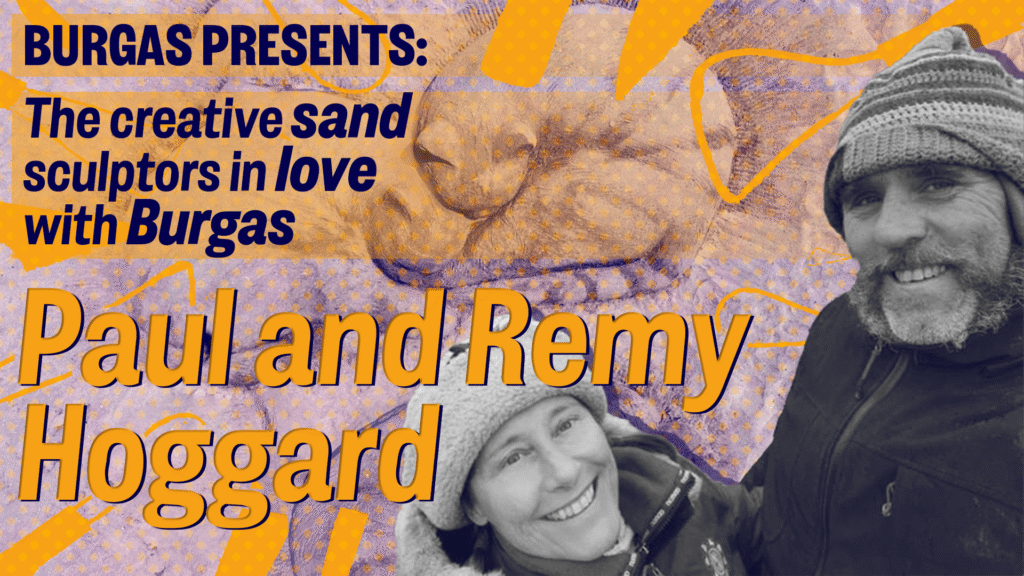
Paul and Remy Hoggard

Intro:

For several years now, remarkable sand sculptures have been appearing on the beach in Burgas. Cats, an elephant, dolphins, martenitsi (traditional Bulgarian red-and-white yarn decorations), the sun, or images of Bulgarian national heroes like Vasil Levski and the Saints Cyril and Methodius. These are just some of the sandy surprises that greet the city each morning.

They are the work of Paul and Remy Hoggard — freelance artists who fell in love with Burgas and continue to delight its residents and visitors with their creations. The creative duo has been working in art for over 20 years, collaborating with the world’s largest and most impressive sand sculpture festivals and museums. And they’ve also gotten Hollywood’s attention — their sand sculptures were featured in the film, Prince of Persia: The Sands of Time.

What is the first art ‘creation’ you remember?

Paul: “My first piece of art… I was a 26-year-old ‘child’ when I first visited paradise. I was on a beach in India, playing with sand — just like children do. After about half an hour, a beautiful face appeared under my hands — that’s how I started making sand sculptures. That was in 1991, so 34 years ago.”

Remy: “I grew up in the Netherlands, where every elementary school and backyard has a sandbox — because we have very nice sand — and we constantly created art. But I specifically remember making a mermaid tail on my sister’s legs.”

My next question was how the “sand art” line began in your work… but you already answered it.

Paul: “Yes, for me it was organic — it just happened. I was just playing, and sometimes when we play as kids, we make discoveries. I discovered that if you use wet sand, you can shape it and create sculptures. For me, it was a true revelation — that I had the ability to sculpt. The sand is just the medium.”

Remy: You can make anything you want out of sand. When we hold workshops with kids and they realize this, the feeling is inspiring. They ask, “Can I make a car?” — “Yes, you can!” “And the inside of the car?” — “Yes, steering wheel, dashboard, everything you want.

Can you share a funny or memorable moment from a creative project you participated in?

Paul: “I remember an event in 2003. I was working hard on a 19-meter sculpture. Then I saw a beautiful blonde Dutch woman walking past me… 2003 — the summer of love! The moment I saw Remy, I fell in love immediately. For three days she followed me everywhere, and I ignored her. When she stopped, I started following her. That was our dance of love, and we’ve been together ever since — 23 years now, and still happy!”

Remy: “I found my sunshine… in the sand. He was standing on a huge pile of sand, making gods and mountains, and his hair was blowing in the wind. I said, “You look great, but doesn’t your hair bother you blowing in your face?” — “I lost my hair tie,” he replied. I gave him one. And ever since then I’ve been taking care of him….”

4. How can more young people be attracted to art?

Paul: “Art is a journey — like drawing, music, dance. To enter it, you have to take the first step — the hardest one. But once you start playing with sand and water — everything is there, free, accessible. Just go to the beach, take sand and water, and start piling it up. After a little lesson from me, Remy, or another sculptor — you can already create. There is something called muscle memory — if you’ve ever stroked a dog, you’ll know how to sculpt a dog. And at the beach, you’re relaxed. Kids need access to art, but clay or paints are expensive. Sand and water aren’t. To bring out the artist in them, we only need an hour.”

Remy: “And to let go of pressure, of expectations. The final result isn’t important, the process is. To connect with the elements — sand, wind, water — and to let yourself flow — that’s when creativity is born. That’s when we’re happiest.”

Paul: “When you create, intuition comes too. Sometimes the sculpture doesn’t want to be what you want it to be — and you intuitively change it. You become an artist with your hands. And at the beach — among seagulls, waves, calm — it’s magical. Kids get addicted.”

Remy: “And sometimes the sand itself decides — it doesn’t want to be a ‘perfect’ face, but rather a characterful one… everything happens under your hands.”

What is your favorite project in Burgas so far?

Paul: “The Christmas project, ‘Nativity’. We created a Nativity scene in the Orthodox style. We met thousands of people. We already knew many people here, but then we met even more. And honestly — we didn’t have a single bad experience. Only good.”

Remy: “Respect for the sculpture, the joy of the people — everyone, rich and poor. Even street people — at first they came to check if there was something for them, but when they saw the sculpture of the Virgin Mary, they said “Thank you.” One beggar — in a wheelchair — no longer accepts our coins because now we’re friends. He appreciated what we did for Burgas.”

Paul: “People don’t always understand, but an artist needs applause and recognition to feel inspired. We get instant recognition — people immediately tell us they love our works. That inspires us to continue. We don’t work for money — we work for life, for God, if you will. That’s the motivation.”

How would you describe Burgas in one word?

Paul: “Beautiful Burgas! … I love Burgas … it’s simply beautiful.”

One dream you have for Burgas?

Paul: “More art. More trees. More sand sculptures, stone sculptures, painters, street artists… art accessible to all. More public participation — street performances, opera at Troikata Square…. If you take opera and ballet outdoors, for the people, you’ll get their attention. Give it to them for free — and if they like it, they’ll come back.”


By |2025-11-20T10:22:41+00:00August 31, 2025|ARTIST|0 Comments

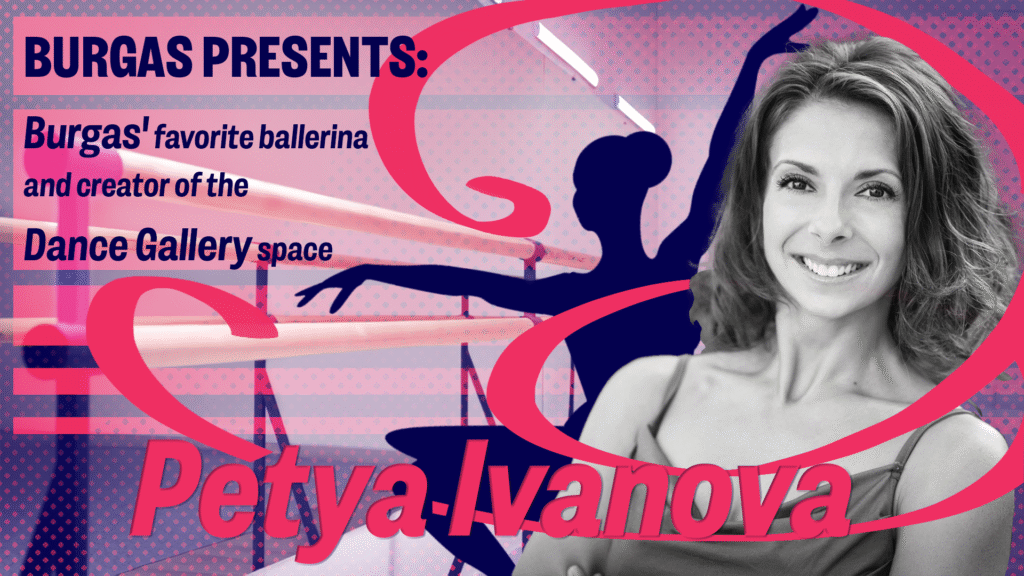
Petya Ivanova

Intro:

Petya Ivanova is one of Burgas’ favorite ballerinas with a 16-year career on the stage of the city’s State Opera. Today, she passes on her experience and love for dance to the students of the National School of Music and Performing Arts ‘Prof. Pancho Vladigerov’, where she teaches classical ballet. Petya has also worked as a ballet teacher in Leipzig, Germany.

Her specialized education began at the Ballet School of the State Opera Burgas, and continued at the Institut del Theatre in Barcelona; NATFIZ ‘Krastyo Sarafov’; and AMTII ‘Prof. Asen Diamandiev’ in Plovdiv.

Petya is the founder of the ‘Dance Gallery’ space in Burgas.

She is a mother of three boys and an avid cyclist.

When did your love for ballet begin?

“My love was first for dance generally, because both my parents were dancers, and I grew up in that environment. I showed interest and talent in dance from a very young age, so it became obvious that if I wanted to pursue this professionally, I couldn’t continue without classical ballet. Just like a musician who wants to play jazz must first go through classical training, similarly, a dancer must learn classical ballet in order to become a true professional. So, quite late—around fifth or sixth grade—I joined the ballet school attached to the Burgas Opera and enrolled in classical ballet classes. Initially, the idea was that classical ballet would be a temporary step, a necessary phase to reach a high dance level. However, the more I delved into this incredibly difficult art form, the more fascinating it became. Eventually, I almost completely gave up the competitive and other types of dance I practiced, and ballet remained my focus.”

The favorite stage you’ve danced on?

“The Burgas stage! I’ve always felt at home on the opera stage — so cozy and beautiful. When I say the Burgas stage, I don’t mean only the opera stage but also the Summer Theater, the ‘Ohluyva’ (Snail) amphitheater, and all the outdoor venues in the city where we’ve performed. The Burgas audience recognizes and appreciates local artists and has always treated us very well. Moreover, in terms of energy, the Burgas stage is my favorite.”

A stage you have dreamed of?

“When I was very young, I dreamed of Broadway. I really love musicals as a form of stage art. I remember when cable TV channels first started appearing: very late at night one of the cartoon channels would switch to classic movies, showing musicals like West Side Story and The Wizard of Oz. I imagined myself dancing in that kind of format. So yes, Broadway is probably my unfulfilled dream stage.”

An unforgettable moment from your dance career?

“An unforgettable moment in my career was when I danced while pregnant in a performance of Giselle. I was already three or four months along but decided to perform it and then stop.”

Tell us about a current project of yours?

“The project currently close to my heart is something I’ve wanted to do for many years. It’s the new space, ‘Dance Gallery’, where I opened a dance supplies store. Like everything in our art, this is not just a store but a place for experiences, for emotion…. Because for a dancer, for an artist to be themselves and to fully develop their potential, it’s very important to feel comfortable and beautiful. My main goal is to help everyone who has decided to engage with dance in a positive way.

My hope is that this space will gradually develop into a club for communication among people in the arts. I know from colleagues of previous generations that they used to bond a lot together. When a performance ended, and the curtains fell, they didn’t go home immediately but rather gathered to discuss — how a certain scene went, how someone performed a monologue, how the spotlight blinded them and their reaction… or other topics related to literature or visual arts. This exchange of energy, knowledge, and experience from various art forms would greatly enrich every art form and every artist.”

How can young people be attracted to dance?

“Another idea of mine is in this direction — I want to create an information center for young people who have decided to pursue dance professionally. To assist those young dancers who at some point feel this is their path and want to continue professionally. Often, I see they get lost and don’t know where to find opportunities. How to submit applications, where to find training options, masterclasses, auditions for various companies and projects. That’s why I want to develop an information center to support young people who want to engage professionally with dance.”

How would you describe Burgas in one word?

Home

One dream you have for Burgas?

“My dream for Burgas is to have more and more people fall in love with and love the city the way I do. Sometimes I’m accused of seeing things through rose-colored glasses, but honestly, from the perspective of someone who has lived abroad and in other Bulgarian cities, I chose to return to Burgas with my three children, and I believe there’s a good reason for that.

My big dream is for Burgas to offer an aesthetic, beautiful, cultural urban environment that would be one of the steps toward keeping young people here and guiding the city upwards.”

By |2025-09-29T13:19:13+00:00August 30, 2025|ARTIST|0 Comments
Go to Top