Introduction:
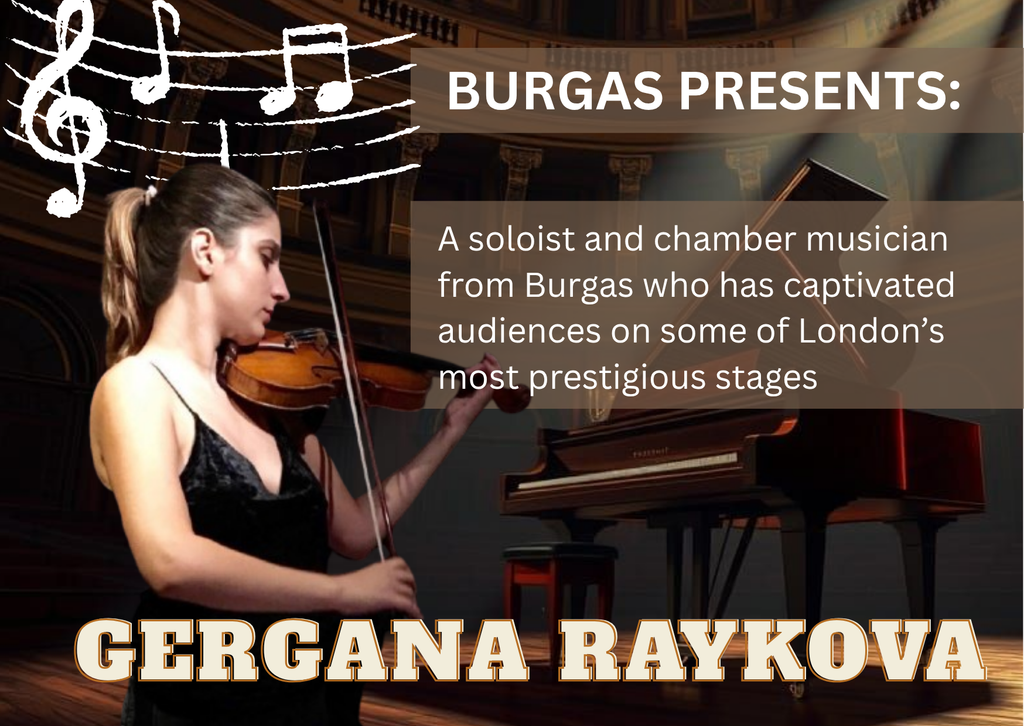
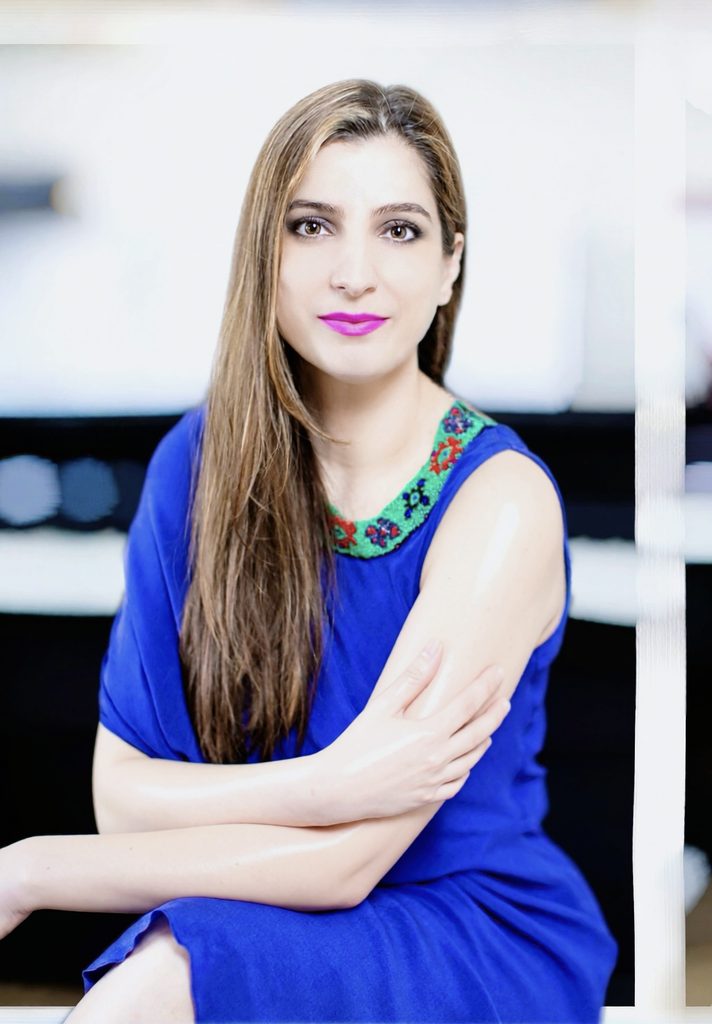
Gergana Raikova is a violinist and the founder of the Burgas Festival – a chamber music festival that brings together musicians from Bulgaria and around the world in Burgas. Her journey into music began at the age of six, when her inner desire to play the violin led her to turn down all other opportunities and embark on her long-standing musical career.
Gergana spent 10 years as a music teacher at the Yehudi Menuhin School in Surrey, England, before deciding to devote her time and energy to a new venture – the creation and development of the Burgas Festival. The festival is the result of her desire to bring together the experience, knowledge, contacts and creativity she has accumulated over the years into a single space dedicated to music.
For her, Burgas is not merely a venue for the festival, but a city to which she is connected through her roots. That is precisely why she chose Burgas as its home – the place where she wants to create an international musical community and make chamber music a natural part of the city’s cultural life.
When did your love of music and the violin begin?
I started playing the violin when I was six years old. I don’t have a very clear memory of exactly what captivated me back then, but I do remember a very strong inner feeling – I simply really wanted a violin.
Over the years, it wasn’t at all easy to find a violin teacher. My parents went to great lengths to find one. There were teachers for piano, guitar, singing – you name it – but I turned them all down. Clearly, something inside me was drawing me towards the violin.
By the age of six and a half, I finally had a teacher and began my journey with the instrument. Since then, music has been an integral part of my life.
Favourite venue where you’ve performed?
Perhaps my favourite stage is… wherever I feel at home. In Burgas.
Sometimes the spaces closest to home and most personal to us remain the most strongly connected to music.
A stage you dream of playing on?
Any stage I haven’t played on yet is a dream. Every stage brings excitement and the feeling that something new is about to happen.
If I had to name one big dream, it would be America – more specifically, New York and the big stages there. I’m drawn to the scale of it, the chance to meet so many people and talents, to learn from them and to face stiff competition.
Is there a moment from your musical performances so far that has really stuck in your mind?
Every concert has something special about it, but the moments that have impressed me most are those when I’ve seen the audience’s emotional reaction.
I’ve had a few performances after which people have cried. In most cases, I didn’t even expect it. One of my most vivid memories is of a person who, weeks after my concert, came up to me and told me that they still feel tears welling up in their eyes when they think back on my performance.
That’s what has the greatest impact – the way music can remain in a person’s life long after the concert has ended. It leaves its mark not only on the performer, but also on the listener. It’s a kind of legacy and spiritual nourishment.
Could you tell us about one of your current projects?
At the moment, my entire focus is on the Burgas Festival. After ten years of teaching in England, I decided to stop so that I could devote myself entirely to the festival – to give my all to its development.
My aim is for the festival to become one big family of musicians. Many of the people I’ve worked with over the years are now extremely active, performing and established musicians. I want them all to come to Burgas, to feel the city’s energy and to play here, so that this energy can be passed on to the people of Burgas as a whole.
There are also specific events coming up in October. I’ll be at Windsor Castle in England, where I’ve been invited to present the festival and give a solo recital. After that, I’ll come to Burgas to present the same programme here, as part of the Burgas Festival programme.
How can more young people be attracted to music?
I think a lot of it starts at home. There are children and young people who simply love classical music because it is part of the environment in which they grew up – what is listened to at home, what is talked about, what is shared.
Classical music has a very powerful influence on emotions and the psyche, and I believe that when a person is exposed to it from an early age, it can become a natural part of their life.
But it is also important that young people themselves are given the opportunity to meet professional musicians. That is why I want the Burgas Festival to develop educational programmes and an academy, within which children and young performers can take lessons, participate in masterclasses and meet world-class musicians face to face.
This is not just about training. It is an opportunity to forge connections and build a network of people that can stay with you for years to come.
How would you describe Burgas in one word?
Home.
When I think of Burgas, I feel as though I’m back home again. I want to go back, to reconnect with my roots, to see the sea, to be with my family and friends.
When you live abroad, that’s precisely the hard part – being separated from the people and your roots. And without roots, it’s hard to thrive for long.
Do you have a dream for Burgas?
I want the city to come alive for more than just one season. Burgas is beautiful and bountiful all year round, and I’d love to see a constant ‘buzz’ of cultural activity – concerts, events, gatherings and reasons for people to come together.
My dream is for the cultural calendar to be full – for there to be a concert or festival-related event every month or two. I want chamber music to become part of the city’s fabric, whilst at the same time Burgas should be a place that attracts musicians and audiences from all over Europe and the world.
The sea is also of immense importance. It evokes a sense of an endless horizon, and music is just like that – it knows no boundaries. By land, air and sea, we can connect Burgas with every corner of the world.
And my main goal for the Burgas Festival is for it to reach the very top European level – to be on a par with the established chamber music festivals in Germany and Switzerland, to attract top-class artists and audiences from all over. We have until 2032, and I believe this can be achieved.